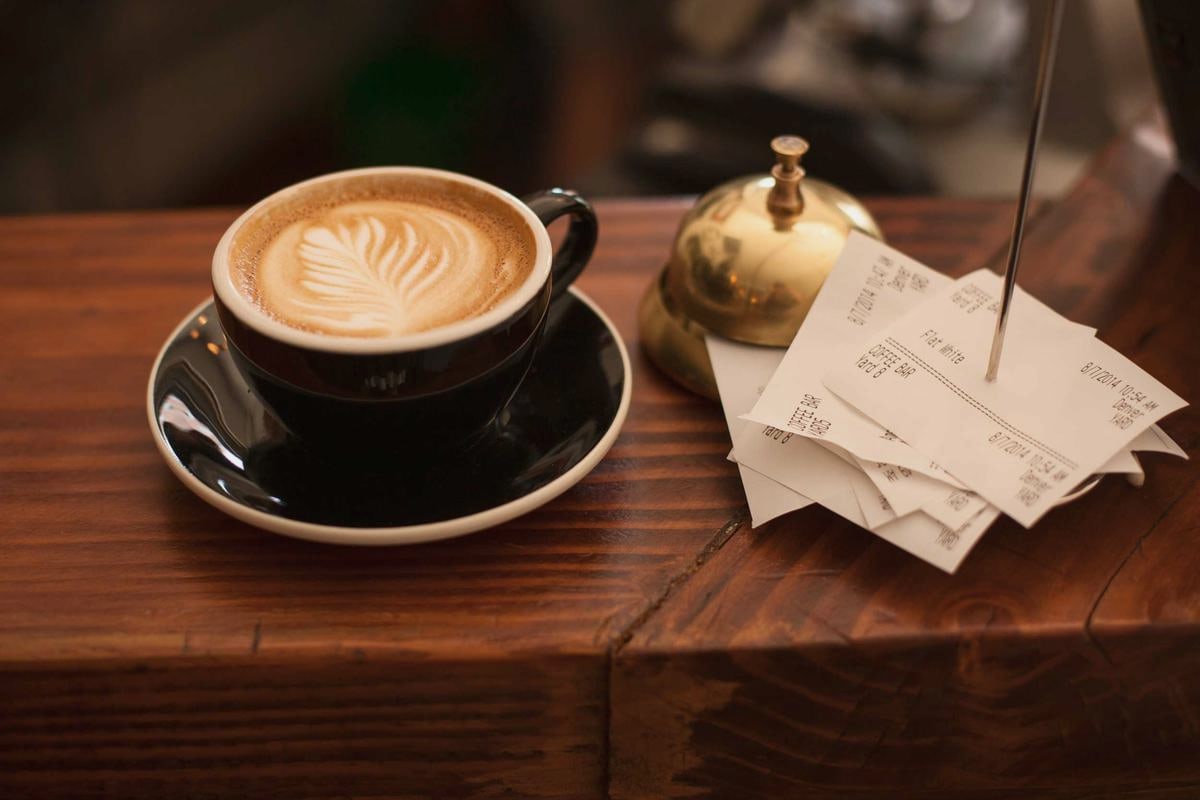
The coffee shop opens before the sun has any business being up.
I come down the lift at five-twenty when my sleep has already failed. The corridor is cooler than the flat — always, as if the building exhales through the night — and the stairwell tiles are slick from yesterday's mop. Downstairs, the shop has half its shutters raised to knee height, the classic compromise between security and ventilation. Inside, Uncle Lim is rinsing cups while the kopi machine warms with a sound like distant rain on metal.
There are three of us at that hour on a weekday: Uncle Lim, an taxi driver reading yesterday's paper without turning the page, and me with a notebook that looks more serious than its contents. I sit at the end table where the fan does not reach. The air smells of butter from yesterday's toast and the ghost of detergent on the floor. Through the gap in the shutters I can see the back lane, still dark, a cat picking its way between crate stacks.
This is not a ritual I advertise. It is simply the hour when my head is least crowded. The estate sleeps. The buses run sparse routes. Even the MRT feels like a private service if you time it wrong on purpose. I write one sentence, sometimes two, about whatever the lane looks like — a hose coiled like a sleeping snake, a shutter padlock gleaming, the way fluorescent light makes everyone's skin the same colour.
Uncle Lim brings kopi without being asked now. I leave the cup untouched until the page has one honest line. He never asks what I write. Once he said, "You always look like you are listening," which is the closest anyone has come to describing this habit correctly. I am listening to a building wake up: the first metal gate rolling, a radio clicking on two floors above, someone's shower pipe knocking.
At six-fifteen the first delivery lorry idles at the corner. The shop fills with workers who speak in shorthand. My hour closes. I fold the notebook, pay, and walk the long way round the block so I enter the flat from the front rather than the back — a small superstition about separating the writing hour from the rest of the day.
People ask why I do not write at home at five in the morning. The answer is boring and true: home is where the laundry waits and the radio is already mine. Downstairs, the coffee shop belongs to other people's routines, and that distance helps. The note stays outside the flat until I type it at the table later, which is a different kind of honesty.
If you ever find yourself awake before the city agrees to be awake, try sitting somewhere that is not yours. You will hear things your own walls keep from you.
On the way back upstairs I passed the void deck where an uncle was already doing slow stretches beside the letter boxes. We did not speak. The lane behind the shop had begun to receive its first lorry. The note in my pocket had three lines. That was enough for a Tuesday that had not asked for more.
Later, typing at the table, I added the detail about Uncle Lim's comment because it was the only dialogue worth keeping. Dialogue on a page should earn its punctuation. His line did. The rest of the morning remains in the cup rings on Formica.